IAPAR

Categories
2019 Day 5

Introduction to Breath and Emotion Workshop by Vinay Kumar (India)

The first workshop on Day 5 started with information about human anatomy. An actor needs to know his/her body in order to be in control of it. Going into the basics of Navarasa – Veera, Hasya, Adbhuta, Shringara – and understanding the bodily changes that take place while experiencing these emotions, and the recreation of these emotions is acting. A person may fake an emotion on stage but it will only be appealing to the audience if the person is able to recreate the physical changes as a result of that emotion. While recreating these emotions, complete control of the respiratory system is necessary. The following exercises involved the respiratory system and eventually making it stronger.

Categories
2019 Day 4

Bali by Adishakti Laboratory for Theatre Arts Research (Pondicherry, India)

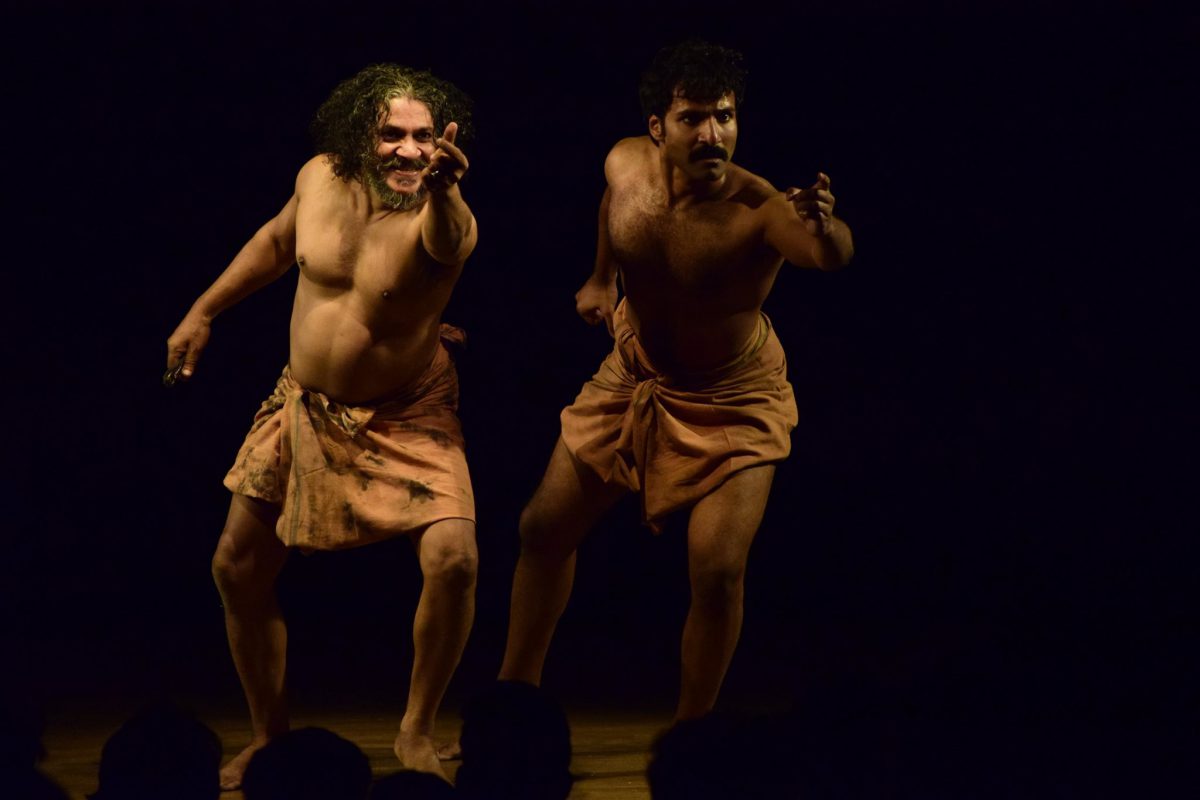
‘Bali’ is a story from the Ramayan that has been depicted using the traditional performance methods in India. The performance managed to keep the audience enthralled. A fusion of contemporary and traditional music accompanied by traditional movement-based pieces that depict the story of Bali and Sugriva. The performance was intense and yet inclusive of some comedic scenes. The lights managed to do whatever little was needed to complete the magic that the five incredible performers had created. The audience left the auditorium in utter awe of the control the performers had over their being on stage.

Categories
2019 Day 4

Panel Discussion – Artist Mobility Around the Globe

This open-to-all panel discussion had representation from Mongolia, Japan, USA, Georgia, Germany, and the Indian panorama. It was moderated by Dr. Ajay Joshi and brought to light the issues artists around the world are facing in terms of movement and exchange, such as funding, government policies, international conflict, lack of means/infrastructure, difficulty in accessing resources, etc. Each artist representative provided a glimpse of the situation in their country and shared the possibilities and opportunities they saw. The discussion was enriching to aspiring or practicing artists looking to engage in international artistic exchange, collaboration, and other endeavors. 

Categories
2019 Day 4

The Human Drive of Performance Workshop by Carolin Sanders (Germany)

After a series of warm-ups, the participants moved on to explore their bodies through various movement exercises. Carolin Sanders used many different games in order to help people work on their inner selves and explore it if possible. Using music and blindfolds, the participants explored the other 4 senses which we usually tend to neglect. Moving without inhibition is necessary. For a performer, making mistakes, exploring and being in the moment are some of the elements necessary to build a performance and the performances were guided by these themes. The workshop ended with interaction about how the process of exploration went through the session.

Categories
2019 Day 3

Patta, Nimittamatra by Rangabhasha (Pune, India)

The Marathi performance was an interaction through letters sent and received in the year 1980 by the renowned Marathi writers G.A Kulkarni and Sunita Deshpande. With a light-colored set, the performance was a treat for bibliophiles as well as theatre enthusiasts. The performance showed the very special friendship between the two authors. The performance managed to create warmth in the audience. With a few heart-touching moments and a few fine funny ones, the letters show the friendshipbetween the two, in its truest forms. The taunting, scolding, and admiration shows us the heartfelt love that they shared for each other. The friendship between the authors is relatable yet unique and hence managed to bring the audience a bit closer to these authors. All in al,l the performance seemed like a heartfelt dedication to the authors because of how the director had handled this very personal interaction without damaging the delicate and beautiful relationship that the two authors shared.

Categories
2019 Day 3

Abhivyakti, Lekhan ani Natak Workshop by Abhiram Bhadkamkar (India)

This workshop on playwriting was the fourth in the workshop series at IITF 2019. Understanding playwriting requires understanding the character to the core. A writer needs to take care of the many factors affecting the character and also consider the backstory of the character. The participants were thoroughly engaged in the interaction session with the facilitator. Understanding the basics of writing without having to be told how to write and what pattern to follow but explore were some of the things the participants enjoyed. The workshop was a medium for the aspiring playwrights to explore their inner self and understand how the time and space unbound plays are written. They were given the scope of finding their own style, reason, and way of writing a play while they were guided in terms of how to go about this exploration.

Categories
2019 Day 3

Folk Art for the Modern Actor Workshop by Gauri Dewal and Happy Ranjeet (India)

The first session on the third day started with an informative interaction between the facilitator and the participants. The folk forms of India and their various connections with the culture of their geographical base was explained. The workshop was a session filled with understanding the nuances of the diverse folk form that the country (India) has and their deep-rooted traditions. A folk art form no matter where it comes from has a unique and close relationship with the culture, traditions, geographical land, etc. Apart from that, a folk form is raw and flexible which is its beauty. It is accepting towards changing times, people, and places and hence more relatable for the people. The workshop made the participants realize the enjoyment of getting to know our traditions while living in modern times. Being able to identify with the different cultures from different lands is something necessary for an actor.

Categories
2019 Day 2

RoopAroop by Unicorn Actors Studio (Delhi, India)

After an exceptional entrance, the actor led the audience to the auditorium, and the performance began. The performance revolved around a male actor performing as a female and a female, that is his potential successor at the job. Performed using the traditional Nautanki format originating from the northern part of India, the play made use of vibrant costumes and a very simplified yet unique set design. ‘Change is the only constant’ and so one must understand that the position one holds shall be taken by another. The performance threw light upon the very deep-rooted patriarchy through the theme that a female also needs to learn how to be a female by a male. It showed the three basic stages through which the street performers have developed; from the streets to the auditorium to the big screen.